

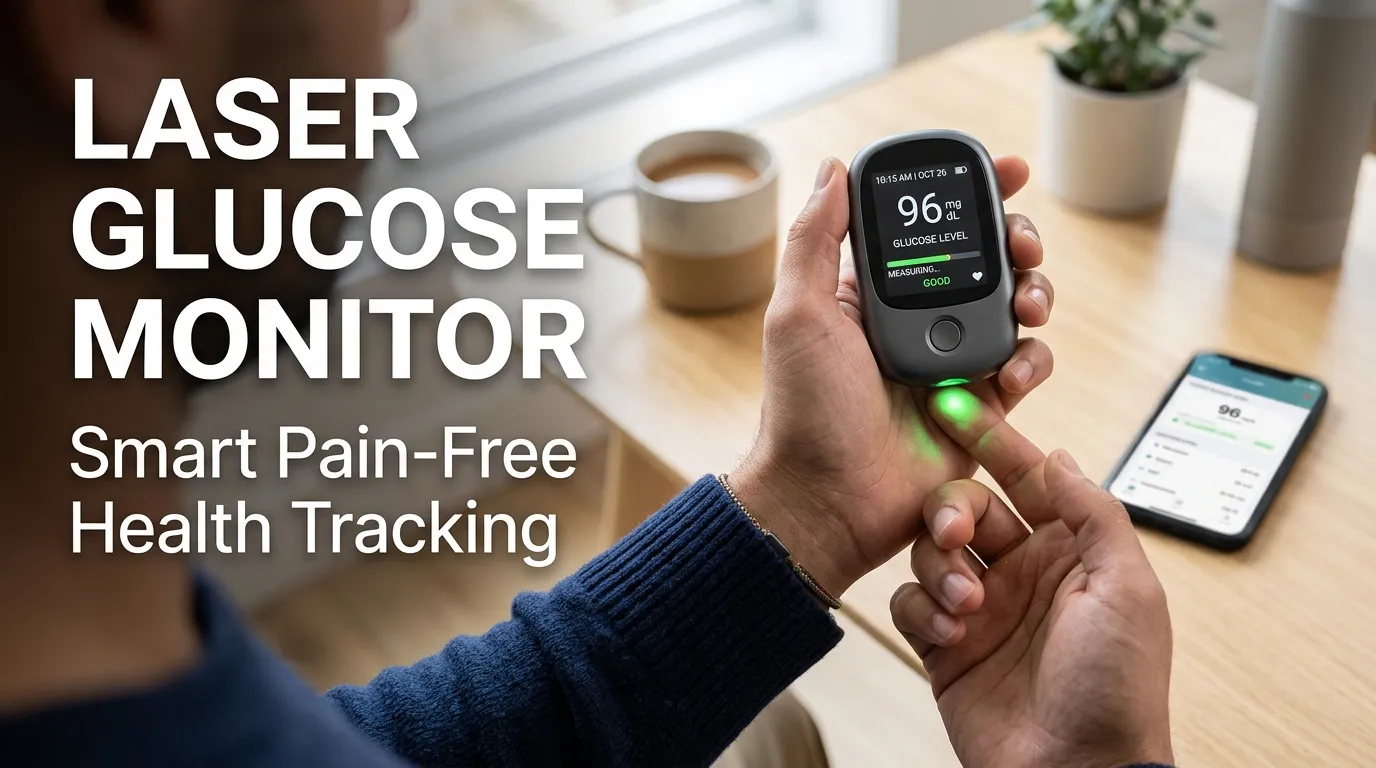
Are you tired of daily finger pricks? A laser glucose monitor offers a revolutionary, painless way to manage your health and track your blood sugar levels accurately.
This comprehensive guide explores the cutting-edge science behind painless blood sugar tracking. We dive deeply into infrared spectroscopy techniques, compare modern devices against traditional methods, evaluate clinical accuracy metrics, and provide actionable insights to help you optimize your daily wellness routines effectively and safely.
The Daily Struggle: Why We Need a Change
Living with type 1 or type 2 diabetes often requires relentless vigilance. The emotional and physical toll of traditional glucose tracking is immense. Repeatedly lancing your fingertips causes calluses, heightened sensitivity, and a psychological burden that frequently leads to testing fatigue. When testing becomes painful and tedious, compliance drops. This drop in monitoring frequency can lead to dangerous fluctuations in blood sugar, increasing the risk of severe complications like neuropathy, cardiovascular disease, and hypoglycemic emergencies.
Even the advent of minimally invasive continuous glucose monitors (CGMs) did not entirely solve this problem. While devices like the Freestyle Libre or Dexcom reduced the need for daily finger pricks, they still require the semi-painful insertion of a small filament beneath the skin. These adhesive sensors can cause skin irritation, allergic contact dermatitis, and the constant physical reminder of a medical condition attached to your arm or abdomen.
A truly non-invasive solution is not just a technological luxury; it is a fundamental shift in patient care. By removing the pain, the physical hardware, and the bio-waste of lancets and test strips, a laser glucose monitor restores dignity and ease to those managing their metabolic health.
What is a Laser Glucose Monitor?
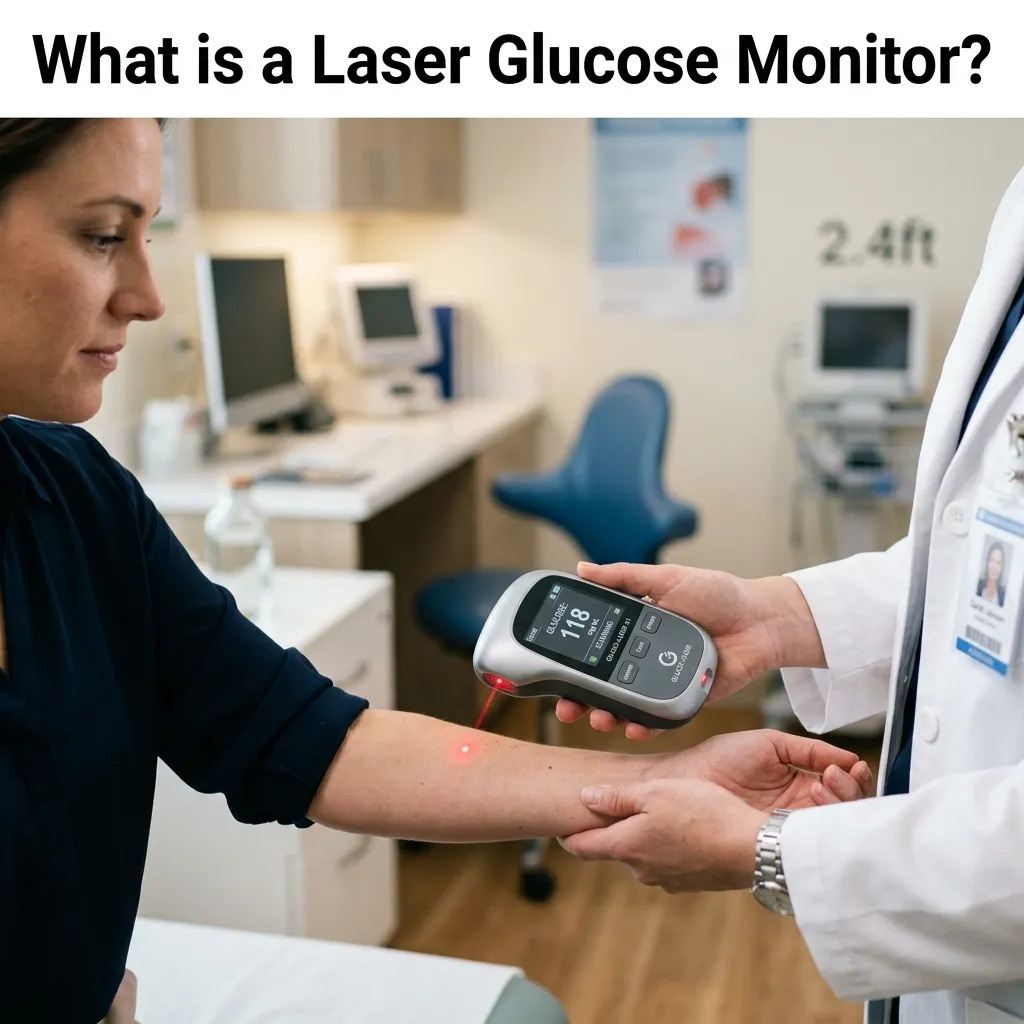 At its core, a laser glucose monitor is an advanced medical device that utilizes light to read the chemical composition of your body’s fluids. Instead of piercing the skin to access capillary blood, the device rests against the surface of your skin—typically the forearm or wrist—and projects specific wavelengths of light into the tissue.
These light waves interact with the interstitial fluid, which is the fluid that surrounds your cells just beneath the outermost layer of skin. Because glucose from your bloodstream naturally diffuses into this interstitial fluid, analyzing it provides a highly accurate proxy for your actual blood sugar levels. This breakthrough in noninvasive glucose monitoring represents a massive leap forward for personalized health tracking.
The Science Behind the Tech: How Light Reads Your Sugar
Understanding how a laser glucose monitor works requires a look at the fascinating world of optical physics. Two primary technologies dominate this emerging field: Raman spectroscopy and Mid-Infrared spectroscopy.
Raman Spectroscopy: Mapping Molecular Fingerprints
Raman spectroscopy relies on the principle of light scattering. When a laser beam is directed into the skin, most of the light scatters elastically, meaning it bounces back with the same energy and color. However, a tiny fraction of that light scatters inelastically. When the light hits a glucose molecule in your interstitial fluid, the light particle (photon) either loses or gains a small amount of energy.
This energy shift changes the wavelength of the returning light. Because glucose molecules have a unique structural bond, the specific way they shift the light creates a distinct “molecular fingerprint.” By capturing this scattered light and analyzing the signature, the optical sensor can calculate the exact concentration of glucose present beneath your skin. Researchers have refined this process over decades to ensure that background noise—such as the presence of proteins, lipids, or water—does not interfere with the glucose reading.
Mid-Infrared Spectroscopy and the Quantum Cascade Laser
Another incredibly powerful approach utilizes the mid-infrared spectrum. Glucose has a highly specific absorption signature in the mid-infrared range (specifically between wavelengths of 8 and 11 micrometers). Devices built on this technology often utilize a quantum cascade laser.
When the quantum cascade laser pulses mid-infrared light into the skin, the glucose molecules absorb this specific optical energy and become excited. This excitation immediately leads to thermal relaxation, which means the glucose molecules release a microscopic amount of heat. This tiny thermal gradient travels back to the surface of the skin, creating a temporary “thermal lens.”
The laser glucose monitor uses a secondary probe beam to read this thermal lens. The amount of heat generated is directly proportional to the amount of glucose in the fluid. This technique, known as photothermal deflectometry, is completely harmless, undetectable to human touch, and highly precise.
Laser Tech vs. Traditional Methods: A Detailed Comparison
 When choosing how to manage your blood sugar levels, understanding the exact differences between a laser glucose monitor and traditional devices is crucial for making an informed healthcare decision.
Health Tracking Comparison Table
|
Feature |
Traditional Finger Prick |
Minimally Invasive CGM |
Laser Glucose Monitor |
|---|---|---|---|
|
Invasiveness |
High (capillary blood drawn) |
Low (subcutaneous filament) |
Zero (light-based) |
|
Pain Level |
Moderate to High (frequent) |
Mild (only during insertion) |
Painless |
|
Consumables |
Test strips, single-use lancets |
Replaceable sensors (10-14 days) |
None required |
|
Data Frequency |
Snapshot (single moment) |
Continuous real-time data |
Continuous or On-demand |
|
Risk of Infection |
Low to Moderate |
Low |
None |
|
Skin Irritation |
Calluses, soreness |
Adhesive allergies, scarring |
None |
Traditional blood meters provide only a snapshot of your health, making it difficult to spot trends or impending sugar spikes. While filament CGMs provide continuous data, they introduce the ongoing cost of replaceable sensors and the discomfort of skin adhesives. The laser glucose monitor eliminates the ongoing financial burden of consumables while providing limitless, pain-free data access.
Clinical Accuracy: Can We Trust the Data?
The ultimate test for any medical device is clinical accuracy. Medical professionals and regulatory bodies use specific metrics to evaluate whether noninvasive devices can safely guide patient treatment.
Understanding MARD Scores
The gold standard metric for evaluating continuous and noninvasive monitors is the MARD score, which stands for Mean Absolute Relative Difference. This percentage reflects how far off the device’s readings are from a highly accurate laboratory blood draw. A lower MARD score indicates higher accuracy.
Early clinical trials of noninvasive optical devices utilizing a quantum cascade laser have demonstrated MARD scores around 19.6% to 20.7%. To put this into perspective, these scores match the accuracy of the very first FDA-approved minimally invasive CGMs that launched in the mid-2000s. While modern filament CGMs now boast MARD scores closer to 9% or 10%, the optical technology is advancing rapidly. Advanced machine learning algorithms and refined laser hardware are quickly closing the gap, making noninvasive devices incredibly reliable for adjunctive use and daily wellness tracking.
Transforming Your Metabolic Health
Integrating a laser glucose monitor into your routine offers profound, life-changing benefits for your overall metabolic health. Without the barrier of pain, you can check your levels dozens of times a day, giving you unprecedented visibility into how your body operates.
By receiving painless, instant feedback, you can observe exactly how specific foods, sleep deprivation, and exercise impact your blood sugar. For instance, you might discover that a morning bowl of oatmeal spikes your sugar dangerously high, whereas substituting it with eggs keeps your levels stable. You can test the impact of a 15-minute walk immediately after a meal to see how movement acts as an insulin sensitizer. This proactive approach helps mitigate insulin resistance before it progresses into more severe complications.
Common Mistakes When Using a Laser Glucose Monitor
Adopting a new medical technology requires a brief learning curve. Avoid these predictable errors to ensure you get the most accurate results from your device:
- Testing on wet or dirty skin: Moisture, sweat, and thick skin lotions can dramatically alter light scattering and absorption. Always ensure your testing site is clean and completely dry.
- Moving during a scan: Optical sensors require precise, stable alignment. Fidgeting, talking, or moving your arm during the brief scanning window can disrupt the optical reading.
- Ignoring baseline calibration: While a laser glucose monitor requires significantly fewer calibrations than older technologies, skipping the initial baseline setups with a traditional finger prick can skew your long-term data.
- Overreacting to micro-fluctuations: Noninvasive devices read interstitial fluid, which has a slight physiological delay (about 5 to 10 minutes) compared to capillary blood. Focus on overall trends and directional arrows rather than panicking over a minor, momentary shift in numbers.
Expert Insights for Maximizing Your Device
 Leading endocrinologists and biomedical engineers suggest several strategies for maximizing the effectiveness of a laser glucose monitor:
- Establish a Routine: Use your laser glucose monitor at the same specific times each day—such as immediately upon waking (fasting), right before a meal, and exactly two hours post-meal. This establishes highly reliable baseline data.
- Validate with Symptoms: If your laser glucose monitor reads unusually high or low, check in with your physical symptoms. If you feel dizzy, shaky, or excessively fatigued, cross-verify the reading with a traditional finger prick while you are still getting used to the optical device.
- Track Lifestyle Variables: Pair your glucose data with a daily journal. Document your sleep quality, stress levels, and hydration. Experts note that high cortisol (stress) and poor sleep significantly impair your body’s ability to process sugar efficiently.
The Future: Wearable Technology Integration
The current landscape of noninvasive glucose monitoring features sleek desktop devices and portable handheld units roughly the size of a smartphone. However, the future is rushing toward massive miniaturization.
The integration of advanced optics into daily wearable technology will change preventative healthcare forever. Biomedical engineering firms are actively developing miniaturized sensor arrays that can fit into the back of a smartwatch or a fitness ring. Once this technology is fully wearable, it will provide passive, continuous background tracking.
Imagine your smartwatch gently vibrating to warn you that your blood sugar is trending downward before you even feel the symptoms of hypoglycemia. This seamless merging of daily fitness tracking with clinical-grade disease management will empower millions of people to intercept health crises before they happen.
Frequently Asked Questions
1. What exactly is a laser glucose monitor?
A laser glucose monitor is a cutting-edge device that uses specific wavelengths of light to measure the sugar concentration in your tissue fluids. Instead of piercing the skin to draw blood, it relies on advanced optical physics to provide pain-free readings.
2. How does a quantum cascade laser help measure blood sugar?
A quantum cascade laser emits mid-infrared light that targets sugar molecules beneath the skin. When the sugar absorbs this light, it creates a minute thermal change on the skin’s surface, which the monitor reads and converts into a highly accurate sugar measurement.
3. Are these devices completely painless?
Yes. Because a laser glucose monitor uses light rather than needles or filaments, there is absolutely zero penetration of the skin, making the entire process completely painless and comfortable for daily use.
4. What is a MARD score and why does it matter?
The MARD score stands for Mean Absolute Relative Difference. It is the clinical metric used to determine the accuracy of sugar-tracking devices. A lower percentage indicates that the monitor’s readings are very close to actual laboratory blood values.
5. Can a laser glucose monitor replace my traditional finger prick entirely?
While a laser glucose monitor is highly advanced, currently it is often used as an adjunctive device. Depending on your medical condition and your doctor’s advice, you may still need occasional finger pricks to calibrate the device or verify extreme high or low readings.
6. Do I need to buy replaceable test strips for these devices?
No. One of the greatest benefits of noninvasive glucose monitoring is that it eliminates the need for expensive, ongoing consumables like test strips and single-use lancets, making it highly cost-effective over time.
7. How does tracking help with metabolic health?
By providing continuous or on-demand data, a laser glucose monitor allows you to see exactly how your body responds to food and exercise. This real-time feedback is crucial for improving your metabolic health and preventing long-term complications.
8. What is interstitial fluid and why is it measured?
Interstitial fluid is the fluid that surrounds the cells just beneath your skin. Because sugar from your blood naturally diffuses into this fluid, measuring it provides a highly reliable reflection of your actual blood sugar levels without drawing blood.
9. Will this technology be available as wearable technology soon?
Yes. Biomedical companies are actively miniaturizing these optical sensors. The goal is to integrate a laser glucose monitor into everyday wearable technology like smartwatches, allowing for discreet, continuous tracking throughout the day.
10. How does skin color or temperature affect the readings?
Advanced laser glucose monitor devices are designed to read beneath the skin’s pigmented layers. Because the light penetrates directly into the fluid layer, natural variations in skin melanin do not significantly impact the accuracy of the readings.
